Britain’s IRGC Designation Comes Into Force After Passing Westminster Without a Recorded Vote
Britain’s new state-threat designation of the IRGC has come into force after passing both Houses of Parliament without a recorded vote. No clear position on the measure has been publicly established from the SDLP, Alliance or Provisional Sinn Féin.
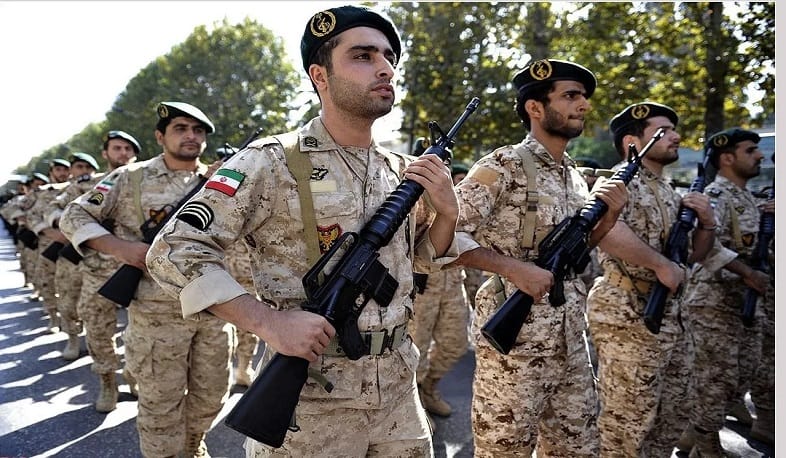
The British Parliament has approved a new terrorism-style designation targeting Iran’s Islamic Revolutionary Guard Corps, with the measure now formally in force.
The National Security Act 2023 (Designated Bodies) Regulations 2026 were approved by the House of Commons on Wednesday and by the House of Lords on Thursday before coming into force on Friday. Alongside the IRGC, the regulations designate the Islamic Movement of Companions of the Right, an Iran-linked organisation also known as IMCR, and Russia’s GRU Volunteer Corps.
The regulations make it a criminal offence within British jurisdiction to support or assist a designated body or to obtain material benefits from one. These offences can carry a sentence of up to 14 years’ imprisonment, while certain acts of espionage or sabotage committed for a designated organisation can attract a life sentence.
The regulations apply in the Six Counties, making them directly relevant to constituents here. The positions of locally elected representatives are therefore not merely questions of foreign policy, but concern criminal law now operating within their constituencies.
The designation is not a formal proscription under the Terrorism Act 2000. Instead, it is the first use of powers created by the recently enacted National Security (State Threats) Act 2026. Ministers have described the system as comparable to terrorist proscription but designed specifically for bodies connected to foreign states.
The British Government says that the IRGC has been linked to threats against Iranian dissidents, Persian-language media organisations and Jewish communities. It has also accused members of the IRGC’s Quds Force of directing attacks claimed by IMCR across Europe. The Government says that MI5 identified at least 20 potentially lethal Iranian-backed plots in Britain within a single year.
However, despite the severity of the new offences, the regulations passed through the Commons without a recorded division. Hansard records only that the question was “put and agreed to”, meaning that no list exists showing how individual MPs voted or whether they were present.
Labour introduced the measure, while Conservative and Liberal Democrat spokespeople explicitly endorsed it during the Commons debate. Calls for the IRGC to be either proscribed under terrorism legislation or designated under the new state-threat regime had also come from the Greens, Reform UK and Restore Britain, as well as the DUP and TUV.
No MP representing a constituency in the Six Counties contributed to the debate. No clear position on the final designation has been publicly established from the SDLP, Alliance or PSF.
Neither of the SDLP’s two Westminster MPs, Claire Hanna and Colum Eastwood, spoke during the debate. It therefore cannot be immediately established whether the party supported the designation, opposed it or deliberately abstained. Its MPs may have assented while present, been absent or chosen not to participate; the unrecorded voice vote provides no means of distinguishing between those possibilities.
The absence of a division does not invalidate the parliamentary approval. Nevertheless, it leaves constituents unable to identify where their representatives stood on a measure creating substantial new criminal offences and touching directly on British policy towards Iran.
The regulations passed uncontested in the House of Lords on Thursday evening. Labour, Conservative and Liberal Democrat representatives all expressed support, no peer spoke against the motion and no division was called. Some peers nevertheless argued that the new designation remained weaker than formal terrorist proscription.
The regulations came into force on Friday, formally designating the IRGC, IMCR and Russia’s GRU Volunteer Corps under Britain’s new state-threat regime.
The three organisations are the first bodies subjected to the new designation powers.
The unanswered local question is a straightforward one: do the parties representing voters in the Six Counties support the designation? In the absence of a recorded vote or public statements from those parties, their positions remain unclear.