Brendan ‘The Dark’ Hughes Was Right
If the final destination is an agreed United Ireland that leaves capitalism, imperialism, and elite power intact, then changing the constitutional border will not deliver the Ireland that generations of working-class republicans fought for.
Andy Burnham's comments that a border poll is "off the cards" should not be dismissed as careless words. They expose a fundamental truth: the British state determines the terms of any constitutional change in Ireland. Socialist republicans and the anti-imperialist movement in Ireland never had illusions about this reality.
The message is unmistakable. London is letting Sinn Féin know who sets the agenda. If Sinn Féin were genuinely caught off guard, it would demonstrate a remarkable lack of political awareness. But they were not shocked. They know 'Project Stormont' has failed badly, regarding the national question; even if it has financially served its participants well.
Under the Good Friday Pacification Agreement, the British Secretary of State holds the power to call a border poll—but only when the outcome is certain, and only when it serves capitalist-imperialist interests. The English ruling class retains this card, employing the age-old tactic of ruling by fooling. James Connolly rightly pointed this out over a century ago, and still, there are great Irish fools to practice on.
The constitutional arrangements are not based upon revolutionary acts of Irish self-determination outside the imperialist system. They are based upon an agreement between governments, designed to accommodate their interests. This gerrymandered process is not a simple all-Ireland question decided in a single vote. It envisages constitutional votes North and South, with outcomes requiring both governments to give effect to expressed wishes. Even if a majority in the North votes for change, the British state does not suddenly disappear from the process.
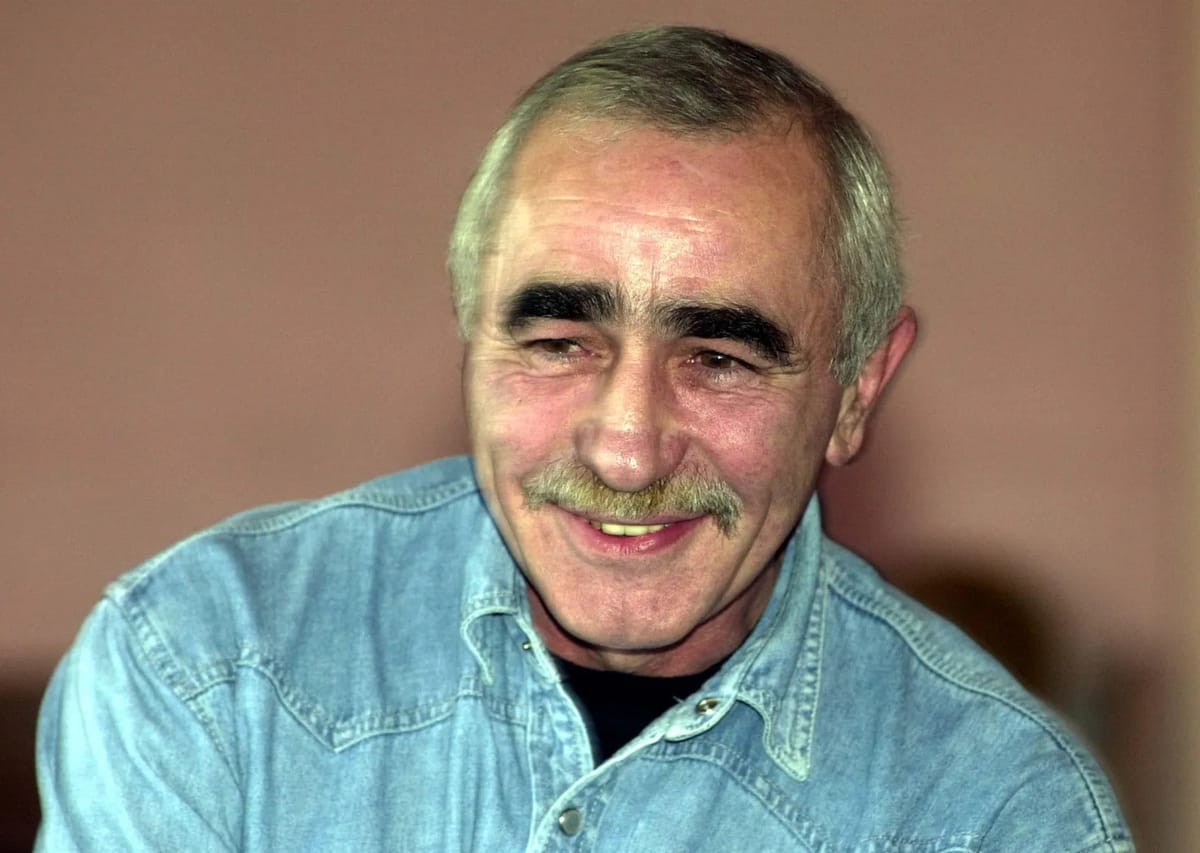
This brings us to Brendan 'The Dark' Hughes. His warnings are more relevant than ever. Hughes understood where constitutional nationalism would lead when devoid of revolutionary theory. He saw the danger long before others acknowledged it.
Hughes looked at the post-Good Friday Pacification Compromise and asked what had happened to the republican objective. He saw Stormont and recognised the British state was still there—the same structures, the same civil service, the same institutions, the same occupation. He asked whether the republican struggle had really been reduced to republicans taking ministerial positions inside that system. His warning was clear: the Stormont regime remained intact. The British still controlled it. Sinn Féin ministers sitting inside it did not magically transform it to meet republican ideals.
Hughes famously questioned whether thirty years of struggle had ultimately come down to "a big room at Stormont, ministerial cars, dark suits" and administering the British system. This was not a criticism from someone advocating a return to war. Hughes specifically rejected that argument, recognising the enormous human cost. His argument was political. What happened to the All-Ireland struggle? What happened to the objective of a 32 County Socialist Republic? What happened to the idea that working-class people of Ireland should control their own political and economic destiny?
Those questions remain vital. Look at where the Sinn Féin project has arrived. Instead of challenging the fundamental structures of capitalism and imperialism, Sinn Féin has become an important part of managing those structures. They sign off on cuts to public services. They operate within Stormont and the Dáil as servants to the status quo. They operate within the imperialist European Union and advocate for its survival.
The great political objective has become constitutional change through a process involving London, Dublin, Washington, and Brussels. But what kind of Ireland would that produce? The "United Ireland" being discussed by the establishment is not the 32-county Socialist Republic that Brendan Hughes fought for. It is an agreed Ireland between imperialist powers—an Ireland acceptable to London, Washington, the European Union, and native capitalism. An Ireland in which existing economic power structures remain intact.
A change in constitutional arrangement does not necessarily mean a change in the class system. The wealthy would remain wealthy. The powerful would remain powerful. Working-class people would still face unaffordable housing, a two-tier health system, poor wages, insecure employment, and deteriorating living standards. Those who create the wealth would still not control it. The British-imposed border might change, but the economic system would remain.
This is where Hughes's warnings become particularly important. He spoke about politics becoming tired, repetitive, and detached from revolutionary ideals. He warned that republicanism itself could become absorbed into a process creating a class of professional politicians. He said: "The republican leadership has always exploited our loyalty." Republican activists gave decades to a struggle based upon very different principles—national liberation and social transformation, an Ireland controlled by its people rather than elites. The revolutionary objective has been replaced by constitutional politics. The struggle was not about elections, ministerial offices, and budgets.
Now we are told to celebrate the possibility of a British government eventually allowing a border poll. That is quite a journey from the original objective.
If a British Prime Minister can say a border poll is "off the table," regardless of subsequent clarifications, it reveals the nature of the Good Friday Agreement. The British state remains central to determining the circumstances of constitutional change. That is precisely what Hughes warned about.
He wasn't saying republicans should return to armed struggle. He was asking a more fundamental question: Why are so-called republicans administering British rule instead of challenging the system that maintains it?
More than eight hundred years of English and British involvement in Ireland. Three hundred years of capitalism has demonstrated that the political system does not serve those who create society's wealth. If the British ruling class eventually decides that an all-Ireland arrangement serves its economic, strategic, or political interests, the British state will adapt accordingly. It has done so before. Unionist protests would not prevent it, nor would republican rhetoric.
The question is not simply whether there will eventually be a United Ireland. The question is: whose United Ireland? A United Ireland designed and negotiated by governments, political parties, big business, and international interests? Or an Ireland fundamentally transformed in the interests of the people who live and work here? The former can be achieved while leaving capitalism, inequality, and elite power untouched. The latter requires a much deeper political and social transformation.
That was the Ireland Brendan Hughes was talking about. He could see the danger of republicans becoming administrators rather than revolutionaries. He could see the danger of confusing political participation with political power.
Today, when a British Prime Minister can effectively tell Sinn Féin that the border poll is not on the agenda, perhaps people should remember exactly what the Dark was warning us about. The Dark was right. The road of constitutional nationalism always leads towards administering the existing system rather than replacing it.
If the final destination is an agreed United Ireland that leaves capitalism, imperialism, and elite power intact, then changing the constitutional border will not deliver the Ireland that generations of working-class republicans fought for. The real question is: "Who will own it, who will control it, and who will benefit from it?"
If the answer remains the same powerful and wealthy minority, the working class will have gained nothing. That is why Burnham's words matter—not because he said a border poll is off the cards, but because they expose the limits of the constitutional road. A road Brendan Hughes warned us about years ago. The Dark was right.
Time to bring politics back into our working-class communities, for only then can we meaningfully begin to build for the Workers' Republic and, in doing so, prepare the ground to demand a democratic 32-county referendum for national liberation.