There's Nothing Funny About It: The Demise Of The Phoenix And The Decline Of Satire
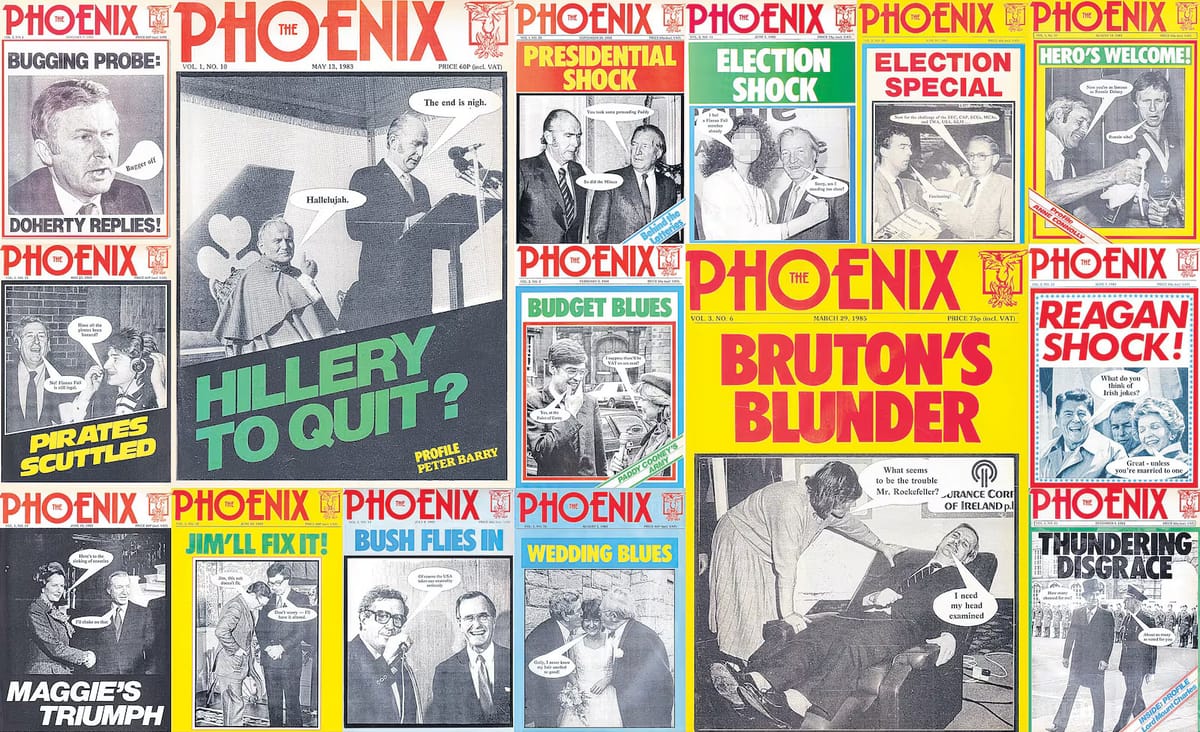
On June 15 this year, The Phoenix Magazine announced that it would be ending publication after 43 years in print.
 Substack
Originally published on Substack.
On June 15 this year, The Phoenix Magazine announced that it would be ending publication after 43 years in print. This event not only put me out of my first job in writing, but signaled the end of another independent publication in Ireland – just as many regional papers have been shut down or acquired by conglomerates. Apart from its gossip items and novel fixations, The Phoenix was characterised by a cynical, comedic tone and a satire section known as ‘Craic and Codology’. Although many of its columns had plenty of funny lines, it was this section where writers could go all out in terms of parody. No holds were barred, as this example from a May issue illustrates:
Dana Erlich, the former Israeli ambassador to Ireland, has spoken out on RTÉ Radio 1 in favour of the Irish ambulance strike. ‘It is heartening to see Ireland adopting Israeli tactics. I have yet to hear that they are employing the double-tap strike, but it is a start at least.’
I mention The Phoenix here as its demise is emblematic of – among many other things – the decline of political satire in Ireland. Apart from being great entertainment for those of us obsessed with the drama of Irish politics, satire plays a role in holding those in power accountable and diffusing tension among the public. Irish literature has had some form of satire for centuries; from the clerical satires of the 17th century to the last morsels of D4 Dad humour present in Ross O’Carroll Kelly’s Irish Times column. Political satire, though, has spent a century since the foundation of RTÉ struggling to be born.
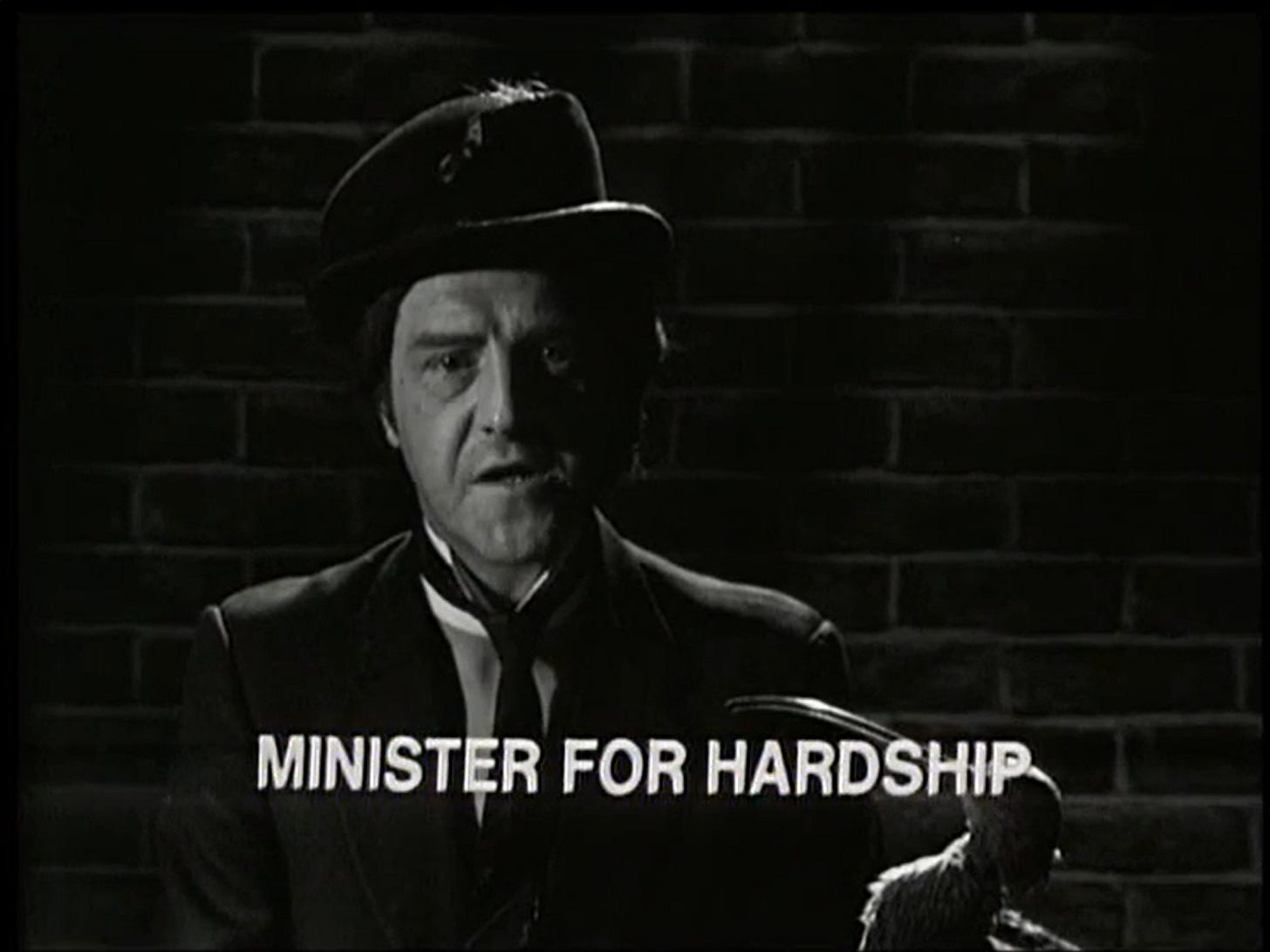
Starting in 1971, the TV sketch show Hall’s Pictorial Weekly gave a sharp view of the politics of the day. It ran for 10 seasons, and was so scathing in its portrayal of Liam Cosgrave’s government that some say it was responsible for its collapse. It portrayed Cosgrave as “The Minister for Hardship”, dressed up as a bum while addressing the nation in black and white (for reasons of economy) announcing the return of ration books and the Glimmerman.
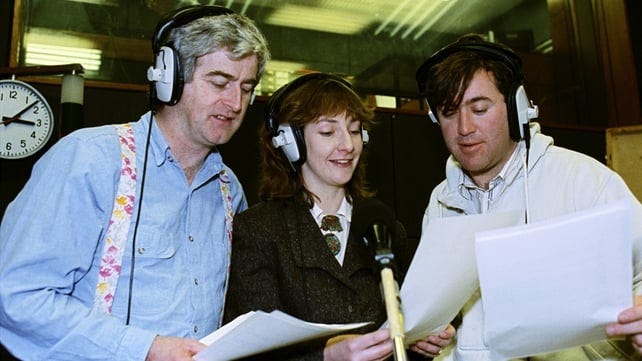
As Charles Haughey’s grip on power began to loosen in the early nineties, Scrap Saturday reached what I believe to be the pinnacle of political satire in this country. Airing on Radio 1 for three years, the brain child of Gerry Stembridge and Dermot Morgan was entirely absurd in its presentation – portraying Haughey and PJ Mara in a comically villainous fashion – but sharp in its criticism. Just as with Hall’s Pictorial Weekly, there were accusations of government interference after the show was cut short by RTÉ. In a time of political stability and economic boom, Bull Island aired on both Radio and TV filling a similar role as the previous shows did but to quieter praise.
Political satire in Ireland would enter another fallow period as the boom got boomier, but after the initial shock of the crash subsided and austerity set it found a second wind. Hall’s saw a reboot in the form of Irish Pictorial Weekly which ran from 2012-15. Mario Rosenstock of Gift Grub fame got himself a TV sketch show on RTÉ which aired during the same period. The veritable king of political satire, however, is Oliver Callan – who has had some form of show on the air since 2007. Initially on Nob Nation as a part of the Gerry Ryan show and now running Callan’s Kicks, Callan rose to the top of Irish spoofers due in large part to his incredible talent for mimicry. Even as his comedy has presented diminishing returns, I am always amazed by the accuracy with which he captures the tone and mannerisms of every new politician on the scene. It is sometimes difficult to distinguish between Micheál Martin’s real voice and Callan’s version – perhaps due to the fact that Callan has had 15 odd years to practice his impression of the Fianna Fáil leader.
Despite my admiration for Callan’s talent, the bite left his satire some time ago. Comparing his 2011 output on Green Tea (as it was then known) to an episode of Callan’s Kicks from 2026, it is shocking how dull his comedy has become. At times his early output rivals the absurd hilarity of Scrap Saturday and the genuine edge of American podcasts such as Chapo Trap House. Tuning into a current episode on Spotify will elicit a few laughs, but you are mainly stuck listening to the same jokes about poor Francis Brennan for the umpteenth time (who Callan seems to have quite an obsession with) and halfhearted jabs at his employer, RTÉ. Whatever writers he currently hires have fallen into a terrible trap of having Callan repeat one of their criticisms about the government through the voice of the given Minister. A recent example:
Micheál Martin: “To be honest I thought I’d be hounded out long before now over broken election promises, how many are we up to now? €200 a month childcare – no – free parking in hospitals – no – undoing Green travesties like the Re-Turn rage machine – not a hope.”
Simon Harris: “You also promised to give a tax credit for gym memberships, build ten-thousand affordable homes a year and decriminalise drugs – but they’re too distracted by ma-hoo-sive overspending on bike sheds”
All of that is true, and Callan delivers it with his usual comedic ad-libs, but I wouldn’t exactly call it satire. It’s really just listing things you’re annoyed about through the voices of those in charge. This formula is repeated for their tepid criticisms of the opposition – Sinn Féin especially. It’s clear that after being given a prime slot on Radio 1 in 2024, Callan had to tone down both his criticisms of the establishment and the risqué nature of his comedy.
I say all this not to take strips off Oliver Callan – who I can credit with my own love of impressions – but to bemoan the state of political satire in Ireland. Just as the country was in 2011, we are currently in a period of major disillusionment among the public. Very few believe the government is able to deal with any of the issues the country is facing, and many are taking to the streets to voice their frustrations. Some are even taking to the fuel depots. One protester from April told a Garda trying to diffuse the movement that “Until the Irish government are hung for treason, I won’t back down”. We need a lot more than the tepid jokes of Callan’s Kicks and AI generated videos of Catherine Connolly donning a balaclava to channel the frustration currently felt by the public. The kind of satire that can make all sides of the spectrum laugh might bridge some of the gaps created by recent polarisation.
The strength of shows like Scrap Saturday was that their scathing criticism came from the public broadcaster, so it reached a wide audience and had some authority behind it. Perhaps RTÉ – who’s original programming has dwindled to Fair City and Dancing with the Stars – is just the vehicle for satire that can overcome modern atomisation. It doesn’t seem like it will be coming from Oliver Callan anytime soon, though.